about the workshop
what actually makes something a computer?
most people assume a computer means a screen, a keyboard, a rectangle you stare at. this workshop starts by taking that apart.
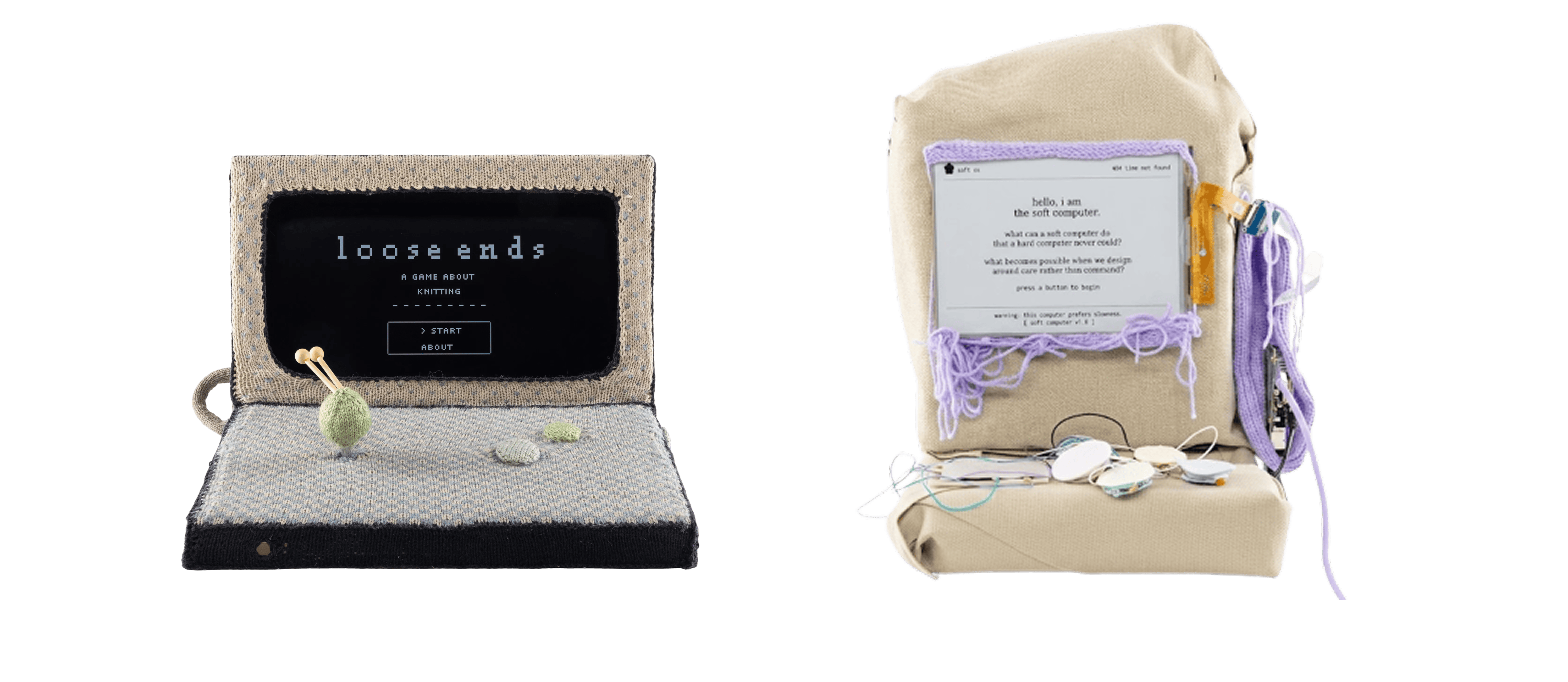
loose ends by Alanna Okun / the soft computer by Yafira Martinez
a basic definition
any device that can:
- store instructions, a program
- execute those instructions in sequence
- process input, even if the only input is "power turns on", into output
by this definition, a thermostat, a calculator, a player piano, and your tiny soft computer all count. they vary in generality, not in whether they're really computers. a laptop is general-purpose, it can run different programs and do different things. your kit runs one small program, and was never meant to run anything else. that's not a lesser kind of computer. it's just a more honest one, one you can actually see all the way through.

references
two pieces that shaped how we think about this project.
the embroidered computer
irene posch + ebru kurbak, part of the stitching worlds project
a working 8-bit electromechanical computer made entirely from gold, linen, hematite, wood, silver, and copper thread. it functions as a computer and as a decorative textile at the same time, using embroidered relays the way pre-semiconductor computers once did. no conventional electronic components at all.
it also carries a real historical thread worth knowing: ada lovelace once observed that the analytical engine "weaves algebraic patterns, just as the jacquard loom weaves flowers and leaves." the jacquard loom, with its binary punch-card storage, is widely considered a predecessor to the modern computer. textiles and computing share real ancestry, this workshop continues that lineage, it doesn't invent it.
1-bit symphony
tristan perich
a cd jewel case with a microchip and speaker wired directly onto the sleeve, wiring exposed, nothing hidden. the chip is programmed with a full 40-minute symphony, compressed onto a single 8kb chip, performed live in real time every time it's switched on. it's not a recording. it's computation, stripped down to almost nothing, with the workings left in plain sight.
one soft and hidden, one bare and exposed, both are legitimate answers to the same question. your enclosure doesn't have to look like either. this is one answer, what's yours?
a limit we chose to keep
the display in your kit can only redraw itself once every 180 seconds (3 minutes), exactly what the manufacturer's own datasheet specifies for this exact panel, tied to how the ink itself physically moves. that's not a shortcut we didn't have time to fix. we could have forced it faster in code. we chose not to.
a computer that makes you wait is unfashionable. but waiting isn't always a failure of design, sometimes it's the most honest thing a piece of technology can ask of you. this workshop is as much about the moments where you work with a material's real limits as it is about the electronics themselves.
the facilitators
led by Alanna Okun and Yafira Martinez , drawing on their combined backgrounds in making and teaching. the workshop covers both the build and the pedagogy behind it, how the kit was designed to be beginner-friendly, and how to pass that on to others.